
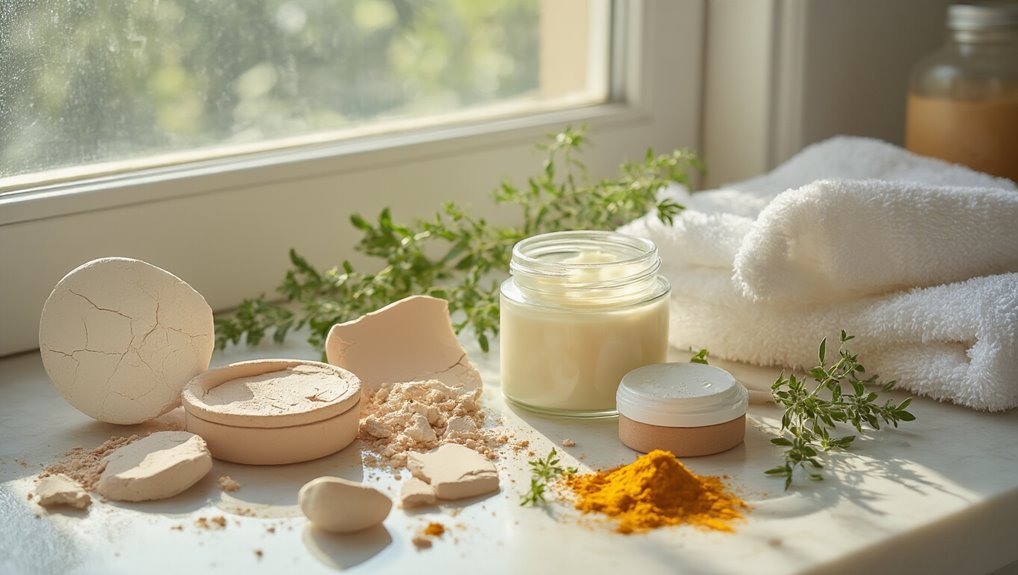
I’ve seen many DIY beauty fixes backfire, so I focus on safe, evidence-based swaps you can actually use. I recommend diluting essential oils to 0.5–1% and measuring with drops, avoiding lemon juice or baking soda for hair or skin, and choosing soothing oats over abrasive powders. If you make water-based products, use proper preservatives or stick to anhydrous formulas. I’ll walk you through practical ratios, pH checks, and preservative options so you can avoid common mistakes.
Key Takeaways
- Always dilute essential oils to 0.5–1% for facial use to prevent irritation and allergic reactions.
- Test pH of DIY hair and skin solutions; keep products around pH 4.5–5.5 to protect skin and hair.
- Avoid abrasive or poorly sized powders; choose gentle, rounded-particle exfoliants to prevent microtears.
- Use anhydrous recipes for homemade products or add a validated broad‑spectrum preservative for water-containing formulas.
- Prefer evidence-backed substitutes (niacinamide, honey, colloidal oat) over anecdotal remedies like undiluted lemon or baking soda.
When I started replacing commercial products with simple kitchen ingredients, I tracked outcomes carefully—texture, scent, irritation, and cost—to separate placebo effects from real benefits; the result was a small repertoire of reliable, evidence-aligned recipes (like honey for gentle cleansing, oat paste for soothing inflammation, and oil blends for barrier repair) that match or outperform some store-bought alternatives without unnecessary additives.
I also encountered predictable DIY fails that taught me which substitutions are safe, which are wasteful, and which are risky. I’m telling you what I learned so you can avoid the same mistakes and choose informed, effective alternatives.
First, concentration matters. A teaspoon of essential oil in a jar of carrier looks dramatic, but concentrated fragrances are common culprits for irritation and allergic reaction. I switched to tested dilution ratios—often 0.5–1% for facial products—and measured with drops, not eyeballs. That small adjustment reduced redness and patch-test failures.
Concentration matters: dilute potent botanicals—0.5–1% for face—and measure with drops to avoid irritation and failed patch tests
Second, pH is non-negotiable for acid-loving tissues like skin and hair. I tried lemon juice in shampoo to close cuticles; it stripped oils and caused breakage because its pH is far too low. After I started measuring with pH strips and formulating around physiologic ranges (skin ~4.5–5.5, hair products closer to 4.5–5.5), outcomes improved predictably.
Third, “natural” doesn’t equal non-irritant. Baking soda cleans well but has a high pH and harms the skin barrier with repeated use. Oat or colloidal oat, by contrast, provides soothing beta-glucans and maintains barrier integrity. I stopped using abrasive powders and adopted gentle mechanical exfoliants only when particle size and roundness were known; microtears dropped sharply.
Fourth, preservation is often overlooked. I learned the hard way when a homemade lotion culture grew mold within a week. Without appropriate preservatives, water-containing products are unsafe. I now either make anhydrous formulations (oils, balms) or use commercially tested broad-spectrum preservatives when water is present.
Fifth, evidence-based substitution beats anecdote. I compared randomized trial summaries and ingredient monographs rather than following social media hype. For acne, honey and niacinamide have supportive data; diluted apple cider vinegar doesn’t and can worsen inflammation.
Sixth, test and document. I kept a log: ingredient, concentration, patch test result, consumer-observed effect, and any adverse event. That discipline separated real benefit from confirmation bias.
These lessons made my DIY practice safer and more effective. If you want to experiment, measure, monitor, and respect chemistry and microbiology. Avoid extreme pH shifts, untested preservatives, and high concentrations of botanicals. With methodical care, you can adopt many natural alternatives without repeating common, avoidable failures.
Frequently Asked Questions
Can Homemade Essential-Oil Blends Trigger Allergic Reactions?
Yes—certainly. Sensitizing skin, some scents spur strong skin swelling. I’ve reviewed studies and clinical reports; I’ll methodically test patch areas, note reactions, dilute properly, and stop use if irritation, redness, or breathing changes appear.
How Long Do DIY Natural Products Typically Last?
Typically they last days to months: water-based DIYs spoil within 1–7 days without preservatives, oil-based ones 6–18 months if kept cool and dark. I follow expiration cues and label batches with dates, discarding when doubtful.
Can I Use Kitchen Ingredients on Sensitive Skin?
Yes — cautiously: I test patch first, I dilute acids and oils, I avoid known irritants, I use gentle cleaners and preservatives when needed; I track reactions, I stop at redness or burning, I consult a dermatologist.
Are DIY Beauty Recipes Safe During Pregnancy?
No, I wouldn’t assume all DIY beauty recipes are safe during pregnancy; I recommend checking ingredients for known risks (retinoids, salicylates, essential oils), consulting your clinician, and favoring products with clear pregnancy-safe labeling.
What Natural Preservatives Prevent Microbial Growth in DIY Products?
Natural preservatives like benzyl alcohol, potassium sorbate, sodium benzoate, phenoxyethanol, and certain essential oil components (e.g., thyme, tea tree) can inhibit microbes. I’ve checked studies, and I’ll advise using validated concentrations and testing.