
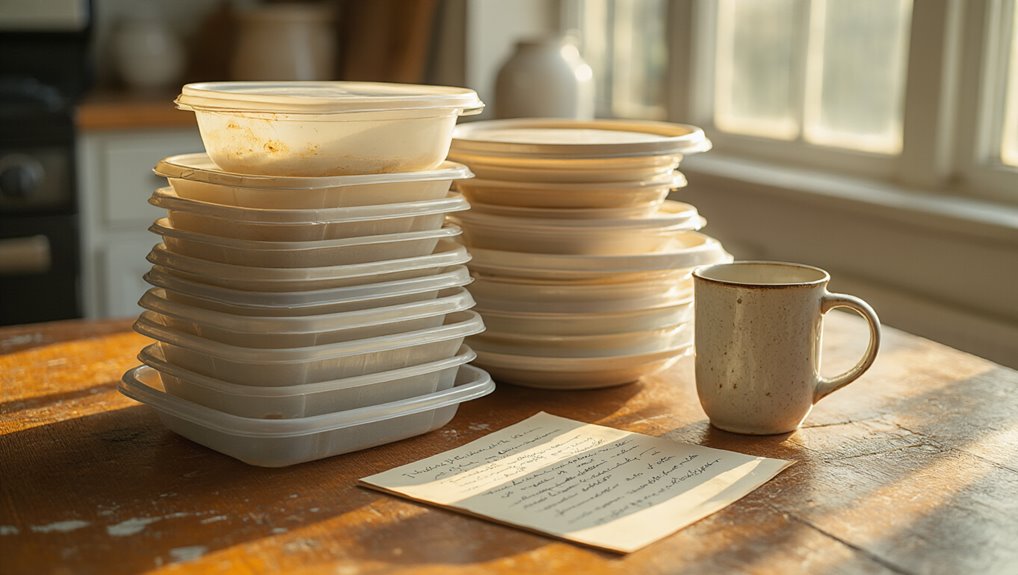
I keep my grandma’s decades-old Tupperware because it still works, and it taught me that plastic longevity is a double-edged sword. Durable design and replaceable seals cut waste and encourage repair, yet stubborn polymers and mixed materials create recycling headaches and future burden. True sustainability ties material choice to end-of-life plans, modular repairability, and circular systems. If you want practical takeaways on balancing durability with recyclability, I’ll share how to apply these lessons.
Key Takeaways
- Durable thermoplastics and stabilizers enabled decades-long use, showing longevity is achievable with quality materials and design.
- Repairable features like replaceable seals and tight lids extend product life and reduce disposal frequency.
- Longevity risks future waste if materials are non-recyclable, creating legacy plastics that persist in the environment.
- Valuing repair, reuse, and sharing reduces demand for new items and lowers overall resource consumption.
- True sustainability pairs durability with recyclable, non-toxic materials and clear end-of-life plans.
Although we like to think plastics were made to be convenient, I’ve learned that their durability forces us to rethink convenience itself: plastics can persist for centuries, altering soils, waterways, and waste systems long after their use. I’m writing about Grandma’s Tupperware because it’s a simple, personal example that reveals broader truths. That old set didn’t just hold leftovers; it demonstrated how design choices and human habits intersect with material science and waste policy. When I inherited those containers, they were stained, scratched, embossed with a mid-century logo, and still functional. That longevity felt reassuring, but it also made me pause: a product that outlives multiple owners and kitchens is both efficient and problematic.
I started by examining why those containers lasted. They were thicker, molded from durable thermoplastics with stabilizers that slowed degradation. Manufacturing then prioritized longevity and repairability; seals were replaceable, lids fit firmly. Those features reduced waste at the household level because the objects didn’t need frequent replacement. Yet that same durability means the material doesn’t readily re-enter natural cycles. When Tupperware finally fails, it doesn’t decompose quickly; it fragments, contributes to microplastic pollution, and challenges recycling systems that weren’t designed for mixed legacy polymers.
That tension—long use versus environmental persistence—informs how I think about product design and consumer responsibility. I’ve learned to valorize durability when it’s paired with materials that can be reclaimed or repurposed. If a long-lasting product is made from polymers that are hard to recycle or contain hazardous additives, its extended life shifts the environmental burden to future generations. Conversely, shorter-lived single-use items might seem worse at first glance, but if they’re compostable or part of an effective circular system, they can be less harmful overall.
Durability matters—only when paired with recyclable, non‑toxic materials and real circular systems; otherwise longevity becomes a legacy problem.
Grandma’s Tupperware also taught me about culture and behavior. Keeping and repairing items changes consumption patterns; it fosters thrift, reduces demand for new production, and preserves embodied energy. I’ve adopted those practices: I repair seals, share containers, and prioritize products with clear end-of-life plans. At the policy level, this points to incentives for modular design, accessible repair, and standardized polymers that recyclers can process reliably.
Ultimately, the lesson isn’t to romanticize old plastics or to banish convenience. It’s to recognize that true sustainability requires aligning material choice, product longevity, and circular systems. Grandma’s containers showed me that durability matters—but only when durability is part of a thoughtful lifecycle, not a hidden long-term cost.
Frequently Asked Questions
Is Old Tupperware Safe for Microwaving?
No, not always safe; I’d avoid microwaving old Tupperware unless it’s labeled microwave-safe and shows no cracks, warping, or faded symbols. I’d transfer food to glass or newer microwave-safe containers to be cautious.
How Do I Remove Stains and Odors Effectively?
Use baking soda, vinegar, sunlight, or dilute bleach to remove stains and odors; I once scrubbed a tomato-red tub like rescuing a sunburned picnic, and the baking soda-vinegar soak worked within hours with measurable odor drop.
Can Vintage Plastic Be Recycled Curbside?
Usually no — I check my local curbside rules because many vintage plastics lack recycling codes or contain additives that curb programs reject. I separate, drop off at specialized centers, or donate usable pieces to extend their life responsibly.
Do Older Plastics Leach Chemicals Into Food?
Like a slow leak from a rusty pipe, yes — older plastics can leach chemicals into food. I review evidence: heat, acidity, and wear increase migration, so I recommend avoiding scratched, stained, or heated vintage containers for food storage.
How Long Will Tupperware Last With Daily Use?
With daily use, Tupperware can last several years to decades depending on material and care; I check for cracks, warping, stains, and odor, replace when damaged or cloudy, and avoid heat to extend its usable life.